

Why Lumpers Are Key to Fast, Efficient Deliveries | Group NB
Everyone obsesses over the last-mile speed.
But most delays don’t happen on the road; they happen at your dock.
And your biggest opportunity to fix them? The crew no one’s talking about: your lumpers.
Quick Summary:

Q: Why are lumpers important in logistics?
A: Lumpers play a critical role in warehouse logistics. They manage freight loading and unloading, streamline dock flow, and reduce detention fees. Efficient lumpers keep supply chains moving, minimize downtime, and protect profit margins.
The Hidden Problem in Dock Operations
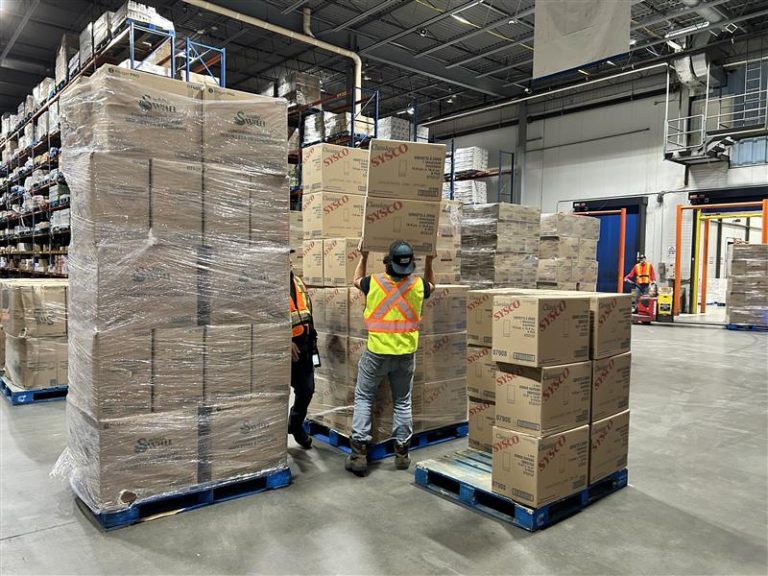
Many logistics leaders focus on route optimization or fleet management while overlooking the dock, where lumpers unload, stage, and prep freight.
When lumpers are slow, untrained, or inconsistent, your entire supply chain feels it.
Even a 20-minute delay per truck adds up to 3+ hours lost per shift, leading to driver scheduling issues, missed deliveries, and SLA penalties.
Your dock is the first and last point of your supply chain. If it’s inefficient, no technology can compensate.
The Real Impact of Poor Lumper Performance
Here’s the reality: Bad lumpers can have hidden costs. These costs can quickly become higher than the savings from advanced warehouse technologies. Lumpers do more than move pallets; they protect your profits, safety record, and client relationships. Dock inefficiency is not just a small mistake; it is a major strategic failure.
👉 Want to know more on how most warehouses end up here? Read:
The True Cost of Detention Time (And Why Lumping Is the Culprit)
Detention fees aren’t “just part of the job.” They’re a sign of poor lumper performance.
A 3-hour dock delay due to miscounts or staging errors can cost $300+ per load—and for 10 trailers daily, that’s a six-figure loss per year.
A trained lumper crew can reduce detention time by up to 60% in just 90 days.
If detention fees are rising, the fix isn’t in dispatch, it’s on the dock.
📩 Want to optimize your dock? Talk to Group NB today →
Common Lumping Mistakes That Sabotage Dock Efficiency
It’s not because they lack modern software or budgets. It’s due to long-standing gaps in operations and old ideas about lumpers and their role in your supply chain.
Here are the most common mistakes that keep dock operations inefficient and underperforming:
Mistake #1: Treating Lumpers as “Just Labour”
Many warehouse managers still see lumpers as low-skill, high-turnover workers. They are easily hired and just as easily replaced.
The result? Constant churn, low engagement, and a crew that’s always in “catch-up” mode. These assumptions prevent strategic hiring, proper onboarding, and long-term investment in performance.
Lumpers are skilled labor. They handle heavy loads, tight timelines, and high-risk environments. Treating them like temps costs you consistency, not savings.
Mistake #2: Prioritizing Speed Over Precision
Speed isn’t the problem, reckless speed is. Many teams quickly unload, often ignoring processes and damage control.
This leads to:
And ironically, more delays as mistakes pile up and need fixing later.
The best lumpers are fast and precise. Efficiency is a product of training, not just hustle.
Mistake #3: Ignoring Training and Process
Untrained lumpers don’t just work slower but they make more mistakes, misuse equipment, and create safety risks.
If every shift feels like it starts from scratch then you’re not just behind schedule, you’re behind your competition.
A standardized process and ongoing training turn lumpers into a reliable, scalable ops force.
These misconceptions often prevent businesses from making strategic investments. The good news? They’re entirely fixable with the right mindset and tools. By rethinking how you manage lumpers, you can turn your dock from a liability into a strategic asset.
Want to see what those mistakes are actually costing you? Read More Here
Speed Isn’t Strategy: Why Unstructured Lumping Slows You Down
Everyone wants a fast dock. If you make lumpers work faster without providing structure, training, or accountability, you won’t see results. Instead, you will get chaos.
Speed isn’t the problem. Speed without precision is.
In many warehouses, the obsession with raw unload times creates sloppy lumper habits:
The result? Freight errors, rework, carrier complaints, and safety incidents. Your operation slows down even though the clock says everyone’s moving faster.
Professional lumpers know better.
When you equip them with:
…you get speed that lasts, not speed that breaks things.
The most efficient docks aren’t just fast but you should assume they’re predictable, accurate, and scalable. Lumpers only become specialists when we treat them that way, rather than just as laborers.
Fast docks don’t always mean efficient ops. In fact, high-speed lumping without standards can quietly sabotage your outbound deadlines and safety scores.
That’s why effective lumping isn’t just fast; it’s predictable, trained, and precise. A good dock doesn’t just move quickly. It moves correctly.
The Solution Framework: The 3P Fix (People, Process, Precision)
This holistic framework focuses on empowering your workforce, standardizing your operations, and embedding accuracy at every step.
People: Empowering your frontline.
Lumpers aren’t “just labor”, they’re your dock’s MVPs. Screen hires for reliability, physical aptitude, and problem-solving skills, as you would for operations leads. Invest in training that goes beyond safety: teach freight handling, pallet optimization, and time management.
Process: Streamlining your flow.
Create SOPs for every dock task: unloading, staging, sorting, and handoffs. Document ideal times for each step and use visual aids like floor markings or checklists to reduce errors.
Precision: Embedding Accuracy and Quality.
Track dock-specific KPIs like trailers/hour, unload time per pallet, and detention incidents. Use a simple spreadsheet or your WMS to monitor trends. Rotate top lumpers to lead shifts, giving them authority to enforce SOPs.
By focusing on People, Process, and Precision, you create a dock environment that is efficient, safe, and adaptable. This environment will also keep improving over time. This proactive approach transforms your lumping operation from a potential liability into a significant competitive advantage.
Want to break this down further? [Read our full guide on building high-performance dock teams →]
Small Delays, Big Damage: The True Cost of Poor Dock Practices
It’s not just about moving boxes faster, it’s about protecting every minute and dollar at your dock.
When your lumper team lacks training, shifts experience messy handoffs. If there is no clear SOP for your dock flow, small delays can add up. A 45-minute delay here and a one-hour slow down there may seem okay now. However, they slowly hurt your operation over time.
Here’s what those small inefficiencies really cost:
|
Inefficiency Cause |
Average Delay |
Cost per Incident |
Estimated Annual Cost |
|---|---|---|---|
|
Untrained Lumpers |
45–90 minutes |
$400–$900 |
$40,000 – $90,000 |
|
No SOPs |
60–120 minutes |
$500–$1,100 |
$50,000 – $110,000 |
|
Poor Shift Handoffs |
30–60 minutes |
$300–$600 |
$30,000 – $60,000 |
|
Inconsistent Staffing |
45–75 minutes |
$350–$800 |
$35,000 – $80,000 |
The takeaway? If you don’t focus on dock efficiency, you are slowing down deliveries. This includes having trained and reliable lumpers. You’re actively paying for avoidable chaos.
Case Study: How Group NB Cut Dock Time by 50% for a Major 3PL
The Challenge
A mid-sized 3PL in North America was facing mounting delays and inefficiencies at their distribution center. Dock crews were inconsistent, pallets were often poorly organized, and trailer turnarounds were creeping past acceptable service levels. The result? Driver complaints, SLA pressure, and growing detention charges.
The Solution
Group NB deployed a specialized lumper team to take over inbound and outbound freight handling. Not your average labor crew. These are professionals who knew their craft.
The Results
|
KPI |
Before Group NB |
After Group NB |
Impact |
|---|---|---|---|
|
Unload/Load Time |
Avg. 90+ mins |
45–60 mins |
30–50% faster |
|
Order Accuracy |
93% |
98% |
25% fewer shipping errors |
|
Detention Charges |
$6,000+/mo |
Negligible |
Major reduction |
“With Group NB on-site, we’re not just turning trucks faster but we have greatly seen the difference and we’re finally running a dock we’re proud of. Their team functions like an extension of our ops department.”
— Logistics Manager, 3PL Client
Why It Matters
Fast deliveries don’t start at the road, they start at the dock. And dock performance hinges on the right team.
This case shows how Group NB’s lumper solution eliminated friction and unlocked real cost savings. It wasn’t about hiring more people. It was about hiring the right ones.
How Group NB Gets It Done
Our team isn’t just experienced, we are proud to say that we have a number of professionals that have stuck with us through the years and we’re built for warehouse performance. Group NB consists of seasoned professionals who are trained in best practices for warehouse operations. We focus on safety, accuracy, and efficiency. We use proven methods to lower risk and ensure that we handle every load correctly the first time.
Our team is also scalable, allowing us to quickly adapt to changing needs. We have a flexible workforce ready to manage more work during busy seasons or times of high demand.
We don’t send bodies. We send solutions.
🔗 Discover our full-service lumping programs
Don’t Let the Dock Drain Your Profits.
Start with one shift, one SOP, one trained team—and see the ripple effect in your ops. Partner with Group NB today and unlock the hidden power at your dock.
Canada
Head Office:
52 Hawthorne Ave, Ottawa, ON K1S 0B1, Canada
+1 855-868-8416
info@groupnb.ca
US
Head Office:
333 SE 2nd Ave. Suite 2000, Miami, Florida, 33131, US
+1 754-218-8500
info@groupnb-usa.com
France
Head Office:
93 Rue De La Villette 69003, Lyon, France
+1 855-868-8416
immigration@groupnb.ca
Morocco
Head Office:
Anoual Capital Center-Boulevard Anoual-Bureau N 14-Escalier B-Etage 3
+212 700-147077
maroc@groupnb.ca
Philippines
Head Office:
Unit 901 9th Floor, One Trium Bldg., Pacific Rim, Alabang, Muntinlupa
+63 968-856-8382
immigration@groupnb.ca