

The Real Cost of Bad Lumpers | Reduce Detention Fees & Protect Profitability
Bad lumpers don’t just slow down your dock, they erode your bottom line, safety record, and client relationships.
In our previous article, Why Lumpers Are Critical to Fast and Efficient Deliveries we explained why efficient lumpers are the backbone of warehouse performance.
Now, let’s dig deeper into how bad lumpers directly cost your business thousands of dollars each month, and what you can do about it.

Detention Fees: Every Minute Counts
Carriers often charge up to $100 per hour for delays. That’s not hypothetical, it’s a real and recurring cost that can quickly pile up.
Example:
A truck arrives for unloading with a tight schedule. Due to a disorganized lumper team, a 2-hour unload stretches into 4. That’s $200 in detention fees for one truck.
For a distribution center handling 10 inbound trucks daily, each delayed by just an hour, that’s $1,000 in detention fees per day — or $20,000 per month.
Key takeaway: Inefficient lumping directly impacts profitability, bleeding thousands from your monthly margins.
Labor Costs: When Inefficiency Ripples Through Your Operation
When lumpers underperform, everyone else pays for it. Slow unloading leads to overtime for forklift operators, inventory clerks, and shipping staff.
Fatigued workers make more mistakes, increasing operational risk and rework. What starts as a minor dock delay can snowball into a full-day productivity loss across multiple departments.
A single inefficient lumper can add hidden labor costs that rival your weekly payroll.
Safety Risks: Rushed Work Leads to Accidents
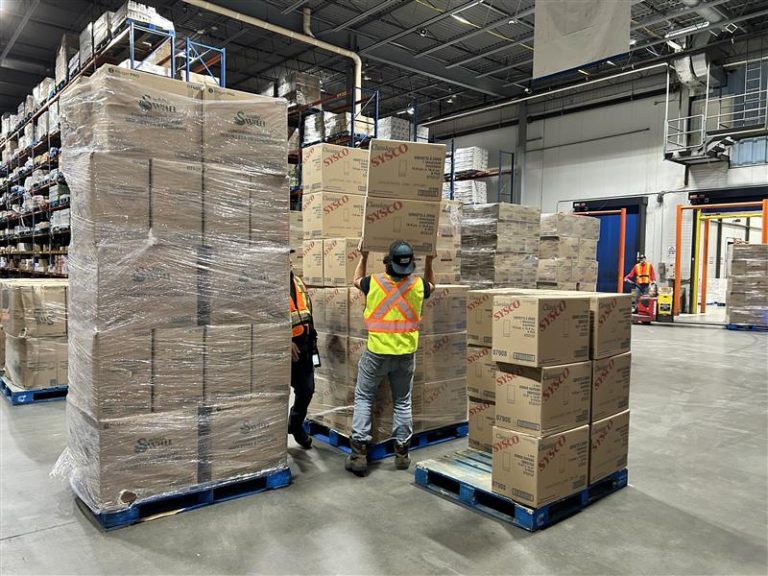
Rushed lumpers, trying to make up for lost time, are 40% more likely to cause accidents. A sloppy dock isn’t just inefficient. It’s a liability waiting to escalate. This statistic isn’t a mere cautionary tale; it’s a reflection of the direct correlation between pressure, speed, and safety.
Take a real-world case: a Midwest distribution center faced a $50,000 workers’ compensation claim after a rushed lumper improperly stacked pallets, causing a collapse that injured a forklift operator. Beyond the immediate financial impact, there’s the long-term cost of a damaged safety record, increased insurance premiums, and potential regulatory fines. These safety risks turn a bad lumper into a costly liability.
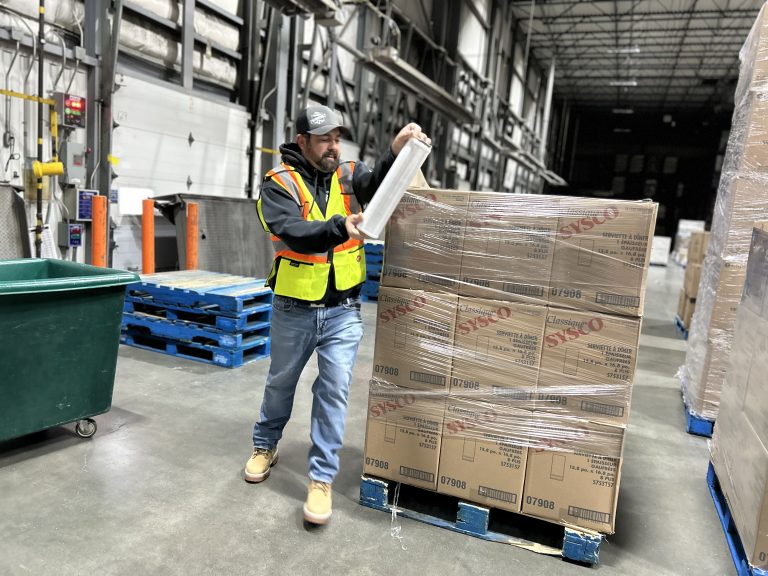
Unsafe lumping practices can quickly turn operational pressure into costly, avoidable accidents.
Client Trust: Reputation Is Everything
A damaged reputation can lead to lost contracts and reduced market share, a difficult challenge to overcome. Clients don’t wait for you to fix inefficiencies. They quietly start shopping for providers who won’t make excuses at the dock.
A regional grocery chain dropped a third-party logistics provider after repeated delays caused by slow lumpers led to stockouts during peak season. The provider lost a $500,000 annual contract, and the ripple effect hurt their reputation with other clients. In a competitive market, one bad lumper can cost you far more than their hourly wage.
Trust, once lost, is expensive — and sometimes impossible — to rebuild.
The Real Impact
The hidden costs of a bad lumper can quickly overshadow the savings from even the most advanced warehouse technologies, because lumpers aren’t just moving pallets, they’re protecting your margins, safety record, and client relationships, making dock inefficiency not just a tactical oversight, but a strategic failure.
Investing in efficient lumper services isn’t just about streamlining a single process; it’s about safeguarding the overall health and competitiveness of your business. By addressing inefficiencies at the dock, you can slash detention fees, curb overtime, reduce safety risks, and preserve client trust.
Canada
Head Office:
52 Hawthorne Ave, Ottawa, ON K1S 0B1, Canada
+1 855-868-8416
info@groupnb.ca
US
Head Office:
333 SE 2nd Ave. Suite 2000, Miami, Florida, 33131, US
+1 754-218-8500
info@groupnb-usa.com
France
Head Office:
93 Rue De La Villette 69003, Lyon, France
+1 855-868-8416
immigration@groupnb.ca
Morocco
Head Office:
Anoual Capital Center-Boulevard Anoual-Bureau N 14-Escalier B-Etage 3
+212 700-147077
maroc@groupnb.ca
Philippines
Head Office:
Unit 901 9th Floor, One Trium Bldg., Pacific Rim, Alabang, Muntinlupa
+63 968-856-8382
immigration@groupnb.ca