

Lumper Services in Southern California: Why Your Detention Bill Keeps Growing
If your container spent an extra two days at the port last month because your dock crew was busy with other trucks, you already know the problem this article addresses. Lumper services are the labor solution most importers only find out about after paying extra fees.
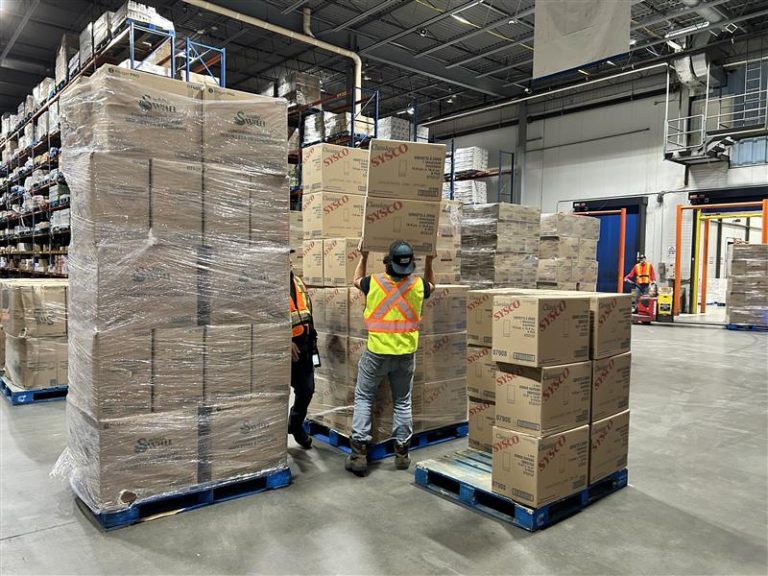
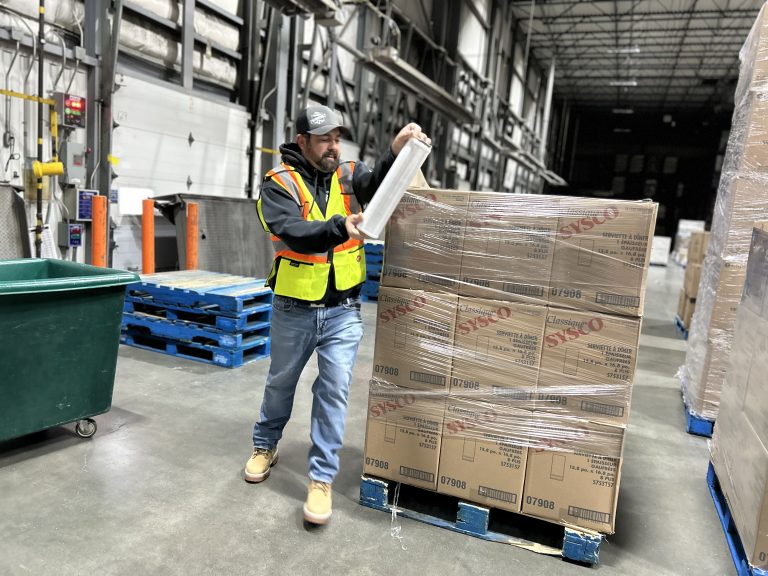
Lumper services are third-party crews you can hire as needed to load, unload, sort, and stage freight in a warehouse or distribution center. They work separately from the carrier’s driver or the warehouse’s regular staff, and their main goal is to speed up dock work and help you avoid detention or demurrage fees.
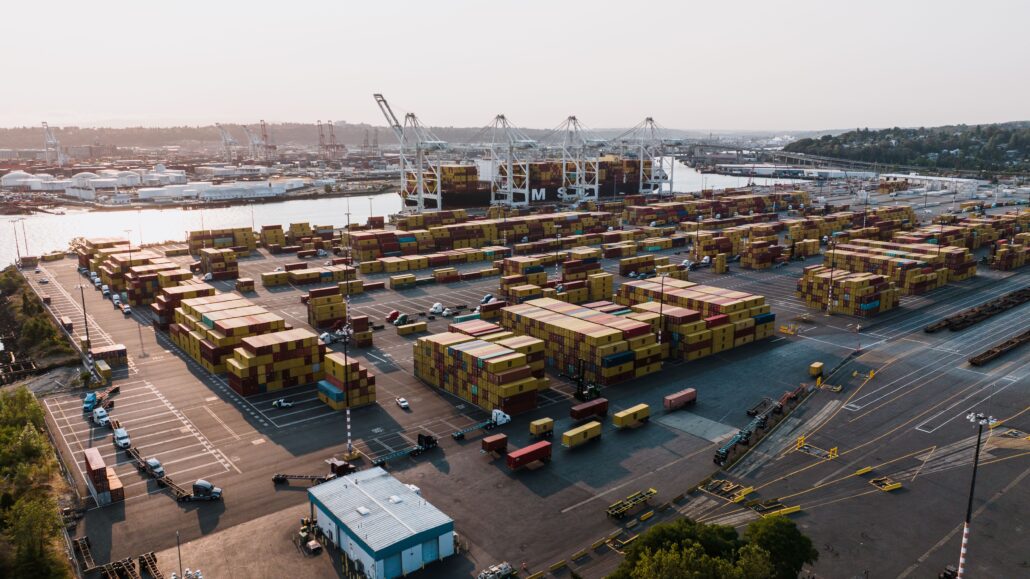
Over the years, I’ve seen many importers treat lumper as just another expense instead of using it as a scheduling tool. That approach is backward. As soon as a container clears customs, detention charges start adding up, and every hour your dock crew is busy elsewhere means you’re paying the carrier to wait.
What Are Lumper Services in Southern California Logistics?
A lumper is more than just a temp worker. Lumpers have a clear job: unload containers, palletize freight, and get the trailer or chassis back in use quickly. In Southern California, where the Ports of Los Angeles and Long Beach handle much of the country’s imports, your container turnaround speed often determines whether you pay detention fees or not.
More warehouses in Southern California now offer lumper service as a regular option instead of an occasional one. That’s because chassis shortages and yard congestion make dock schedules unpredictable almost every day. You can’t control when several trucks show up at once, but you can decide if you have extra labor ready to help.
Why Do Port Late Fees Pile Up So Quickly in Southern California?
Detention and demurrage are separate fees, and mixing them can be expensive. The terminal charges demurrage if a container stays in the port yard past its free time. Detention is charged by the ocean carrier after the container leaves the terminal but hasn’t been returned empty. Both fees have their own timelines and don’t consider your staffing problems.
[Based on 2026 Southern California Freight Logistics Data and FMC reporting], free time at LA/Long Beach terminals is often shorter than the time it takes a mid-sized distribution center to get an open dock and a full crew. That’s where fees add up. The Federal Maritime Commission says carriers must show reasonable cause for charges. Still, it’s easy for them to do that if your container sat unopened at your facility for several days.
How On-Demand Lumping Mitigates Detention and Demurrage Fees
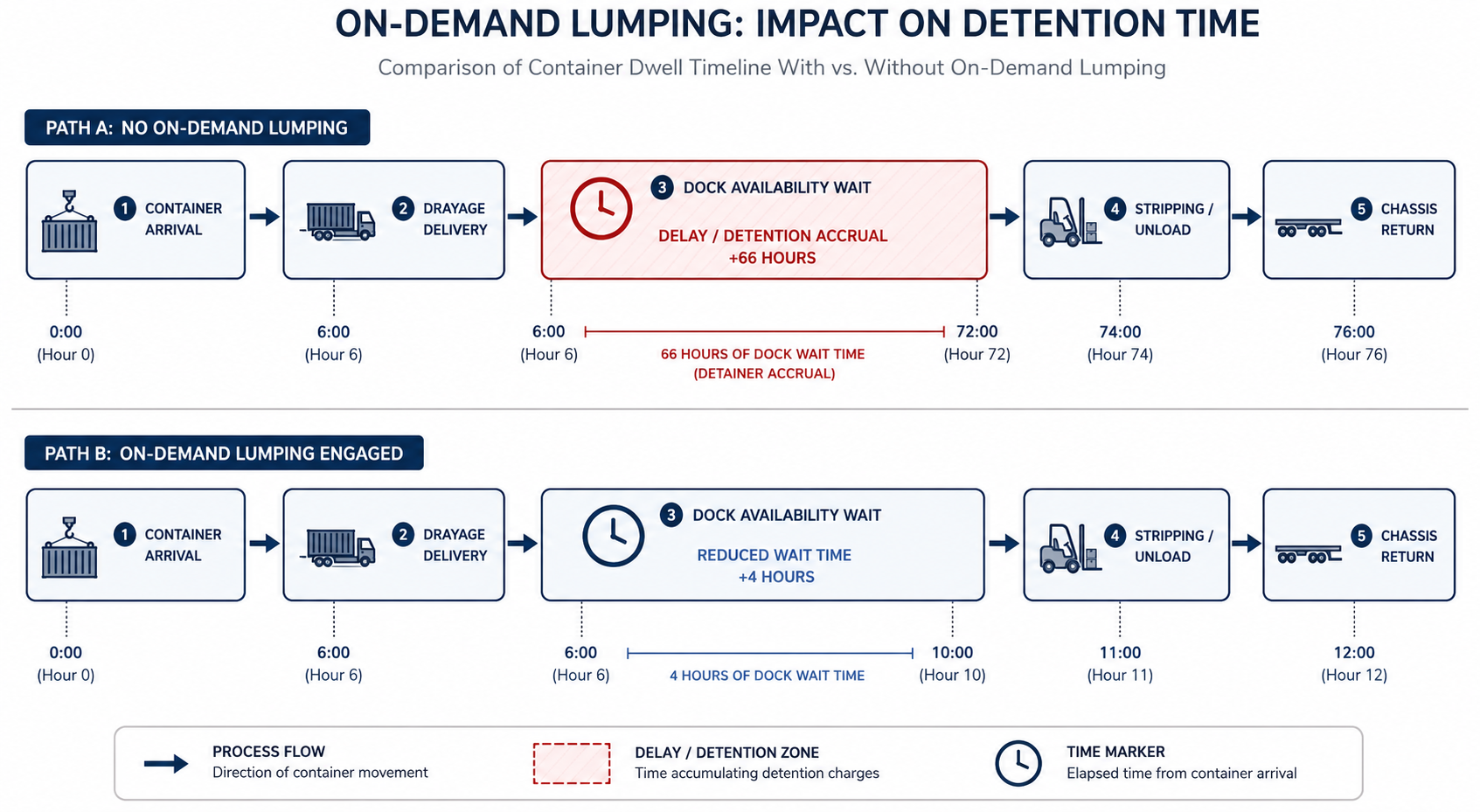
On-demand lumping directly addresses detention fees. A crew can arrive within hours, unload the container, and quickly send the empty back to the drayage provider. If you already work with a drayage partner for chassis management, adding on-call lumpers helps keep containers moving instead of letting them sit between pickup and warehouse unloading.
How Does On-Demand Lumping Improve Container Stripping Efficiency?
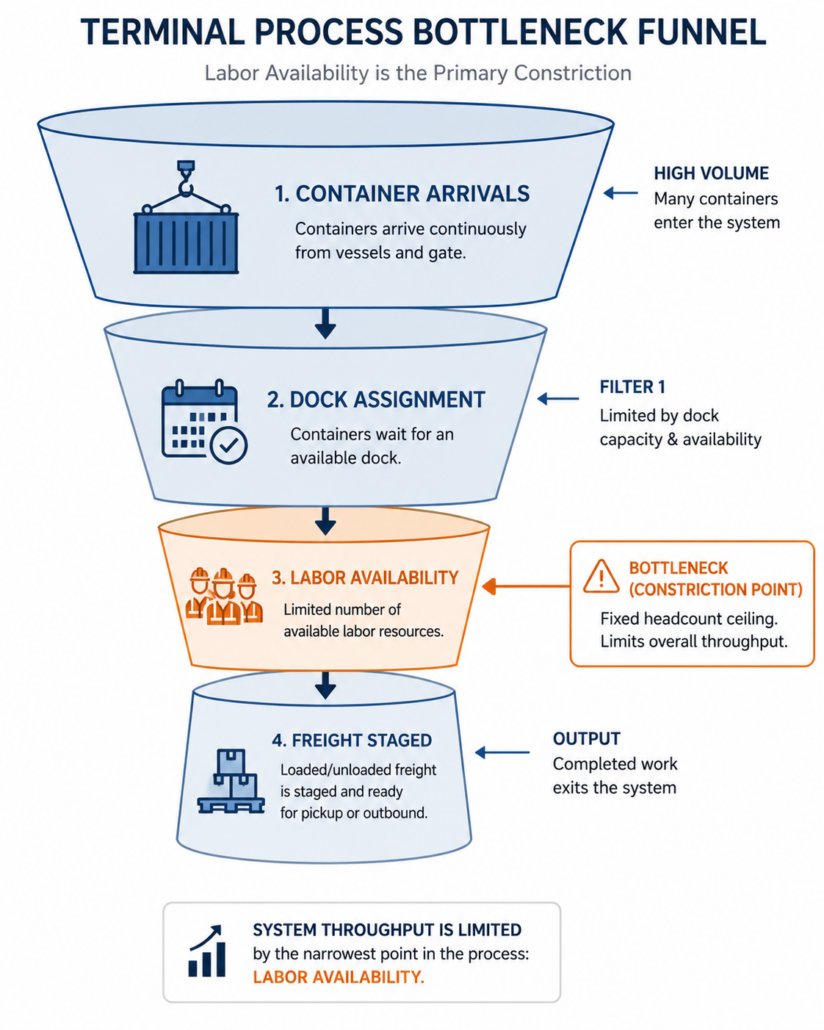
Stripping efficiency depends on two things: crew size and specialization. Permanent warehouse teams are set up for normal daily volume, not for busy days. If four containers arrive at once, a four-person crew can’t suddenly become sixteen people. They just fall behind, and every container after the first one gets delayed.
Lumpers are matched to busy periods, not just the average day. A dispatcher can send anywhere from two to twelve workers based on how many containers you have, without the cost of keeping a big crew on slow days. This flexibility is the main benefit, and it’s why stripping speed—how many containers are unloaded per labor hour—improves when you stop relying only on a fixed staff.
After the freight is unloaded, the next challenge is inventory staging. If pallets are placed in a staging lane that’s already full, the congestion just shifts a few feet. Lumpers that work closely with your inventory staging process help prevent freight from piling up right after unloading.
In-House Crew or On-Demand Lumper Services: Which Model Actually Predicts Cost?
Many importers are surprised by how hard it is to predict costs. A permanent crew has a set weekly cost, but that number can be misleading because it doesn’t include overtime, temp agency fees, or detention charges during busy periods. On-demand lumping costs vary by job, but you get a clear quote per container, making it easier to plan based on your real monthly volume instead of an average.
|
Factor |
In-House Warehouse Team |
On-Demand Lumper Services |
|
Labor Availability Latency |
Fixed headcount; surge days create backlog measured in hours to days |
Scalable same-day or next-day dispatch based on manifest volume |
|
Cost Predictability Structure |
Fixed payroll plus unpredictable overtime and hidden detention exposure |
Fixed per-container or per-hour rate quoted before the job starts |
|
Detention Risk Mitigation |
Limited; crew size caps how many containers clear per day |
High; crew scales to match arrival volume, shortening dock time |
|
Specialization for Peak Volume |
Requires cross-training or temp staffing under time pressure |
Crews arrive already trained for high-volume stripping and staging |
What Bottlenecks Show up When Warehouses Skip Lumper Services?
The biggest problem I see isn’t bad lumping vendors; it’s warehouses that never use them. Facilities with only a small permanent staff often treat every busy day like an emergency, pulling office workers onto the dock or delaying less urgent freight to focus on containers close to a detention deadline. This approach is more like triage than a real operations plan, and it leads to unpredictable unloading times that make weekly planning difficult.
The Inventory Staging Gap
Even the best lumper job can slow down if the staging area isn’t organized. Crews need to know exactly where to put pallets as soon as they come off the trailer, or the time you saved unloading is lost waiting at the staging line. By matching lumpers schedules with your warehouse management system’s put-away plan, you can avoid losing those saved hours.
What Do Most Importers Get Wrong About Container Utilization?
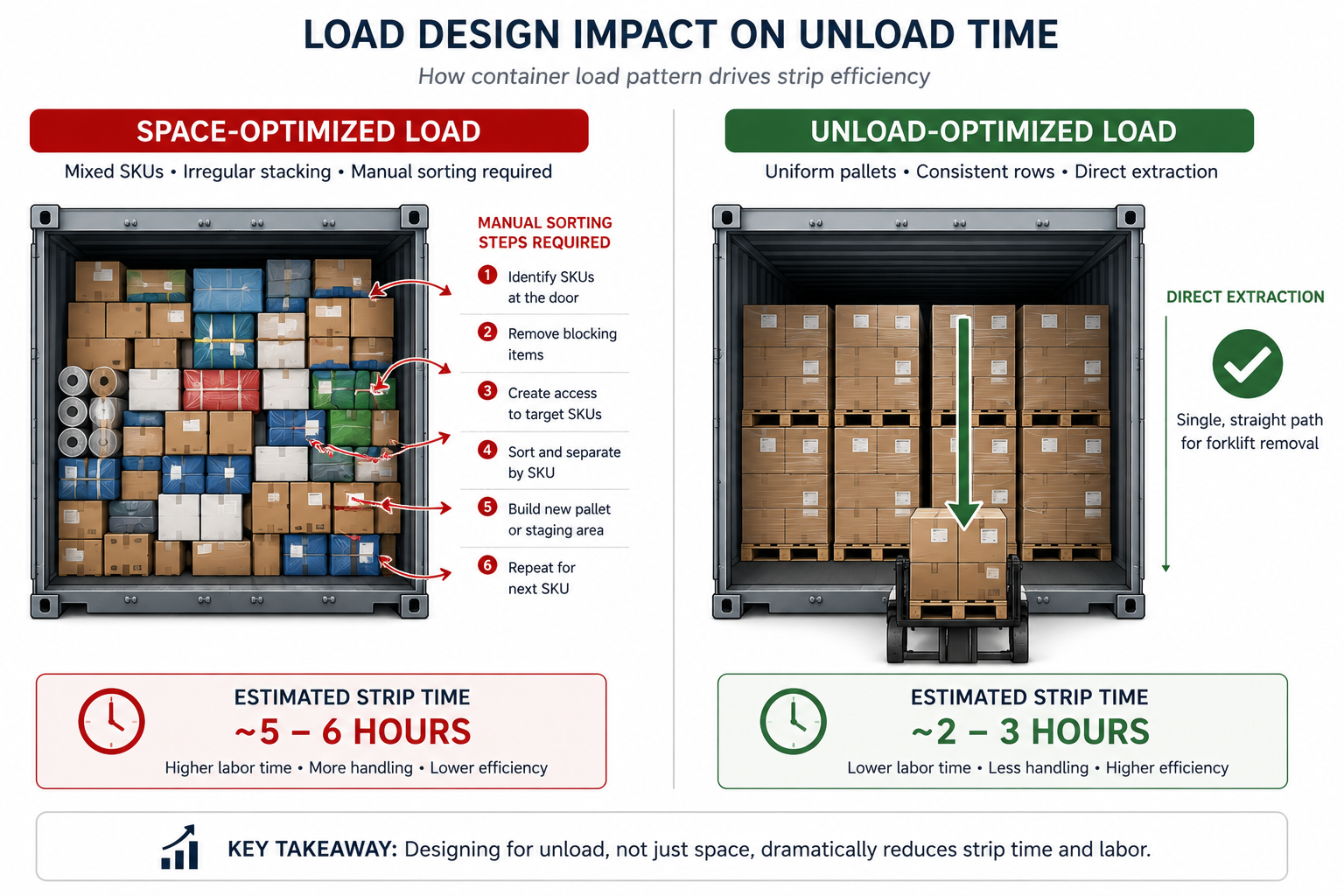
Pro Tip: Many importers think a “full” container is quick to unload, but that’s often not true. Containers packed for maximum space, without considering the order of unloading, usually need to be fully unpacked and sorted by hand. When mixed SKUs are stacked from floor to ceiling, it can take a lumper twice as long to unload compared to a container with uniform, pre-sorted pallets. If you can, ask your supplier to load containers in a way that matches your unloading priorities, not just for maximum volume.
Where To Start if You’re Losing Money to Detention This Week
If you’re reacting to detention fees instead of stopping them before they happen, start by checking one number: your average dock-to-empty time per container over the past 30 days. Compare this to your carrier’s free time. If the difference is less than six hours, you probably have a scheduling issue that a dispatcher can fix. If it’s a day or more, you have a labor shortage, which is exactly what on-demand lumpers are meant to solve. Group NB can send lumpers anywhere in Southern California on short notice, matched to your actual workload. Call Group NB before your next busy day, not after you get a detention bill.
Canada
Head Office:
52 Hawthorne Ave, Ottawa, ON K1S 0B1, Canada
+1 855-868-8416
info@groupnb.ca
US
Head Office:
333 SE 2nd Ave. Suite 2000, Miami, Florida, 33131, US
+1 754-218-8500
info@groupnb-usa.com
France
Head Office:
93 Rue De La Villette
69003, Lyon, France
+1 855-868-8416
immigration@groupnb.ca
Morocco
Head Office:
Anoual Capital Center-Boulevard Anoual-Bureau N 14-Escalier B-Etage 3
+212 700-147077
maroc@groupnb.ca
Philippines
Head Office:
Unit 901 9th Floor, One Trium Bldg., Pacific Rim, Alabang, Muntinlupa
+63 968-856-8382
immigration@groupnb.ca