Inbound Dock Management: Prevent Inbound Bottlenecks Before the Holiday Shutdown
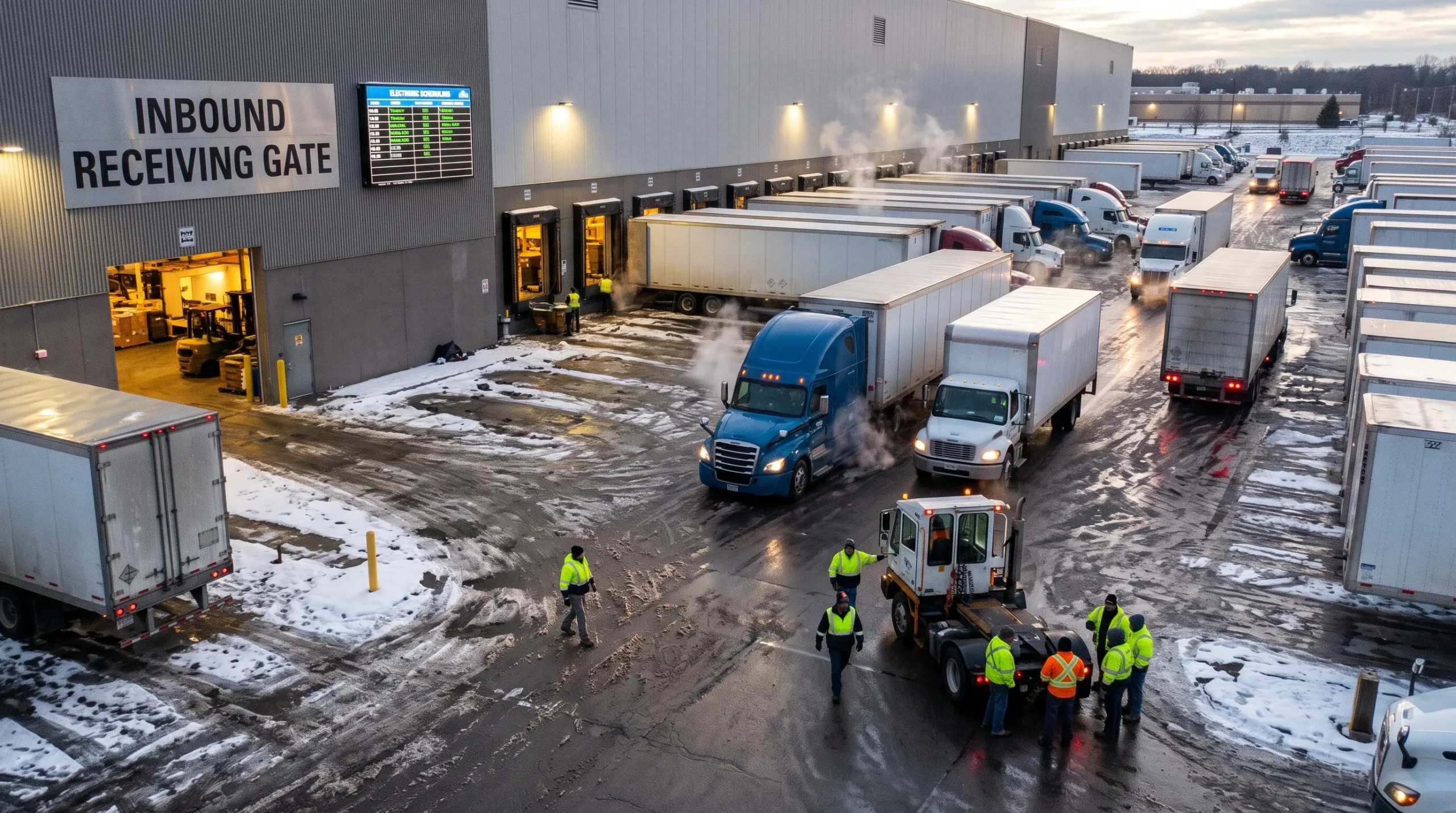
Inbound dock management strategy showing semi-trucks at a distribution center during the pre-Thanksgiving freight surge

What causes the pre-Thanksgiving dock freeze, and how can warehouses prevent it?

The pre-Thanksgiving dock freeze happens in the second and third weeks of November, when distribution centers face a 200-300% spike in inbound holiday freight, carrier delivery cutoffs before the four-day holiday weekend, and staff absenteeism.

Without proactive inbound dock management, trailers remain stranded in yards over the four-day shutdown, triggering severe carrier detention fees and crippled dock operations on Monday morning.

The 4-Step Solution:

  • Deploy managed inbound receiving: contract on-demand lumper services to strip and sort floor-loaded trailers faster than a standard crew.
  • Implement 3PL Cross-Docking: Route fast-moving holiday inventory directly to staging bays, bypassing putaway into warehouse racking.
  • Protect Temperature-Sensitive Food Freight: Partner with 3PL food logistics companies to maintain strict cold-chain compliance under FSMA rules during dock surges.
  • Enforce dynamic yard scheduling: Stagger carrier arrival windows to eliminate $75–$150/hr carrier detention fees over the four-day Thanksgiving closure.

The 72-Hour Pre-Holiday Trap: Why Inbound Docks Freeze in Mid-November

The Wednesday before Thanksgiving is the hardest operational deadline of the fourth quarter.

While consumer-facing retail prepares for Black Friday shopping, warehouse and supply chain leaders face a different challenge on the receiving dock: clearing the yard before the facility goes dark for the Thanksgiving weekend.

Between November 10 and 24, inbound trailer volume surges as suppliers push inventory forward. At the same time, full-time warehouse associates submit holiday PTO requests, and commercial carriers issue strict delivery cutoffs.

When trailers cannot be unloaded before doors close Wednesday night, facilities face immediate, severe penalties:

  • 1. Compounding carrier detention charges:
    Unreturned trailers left stranded in your yard over Thanksgiving can accumulate detention fees, typically $75 to $150 per hour per trailer, throughout the four-day shutdown.
  • 2. Blocked Inbound Gates on Monday Morning: Trapped trailers prevent fresh freight from docking when operations resume, stalling replenishment cycles.
  • 3. Cold-Chain Spoilage Risks: For facilities handling perishables, dock delays can compromise temperature integrity, causing complete load rejections.

To keep freight moving, distribution managers must execute a disciplined inbound dock management plan for holiday logistics and receiving workflows before the freeze.

The Pre-Thanksgiving Inbound Workflow

image.png

4 Strategic Solutions to Eliminate Pre-Thanksgiving Dock Bottlenecks

1. Scale Contingent Unloading with a Dedicated Lumper Service

Relying solely on in-house warehouse associates to handle pre-Thanksgiving volume spikes is an operational risk. Core team members are often split between order picking, inventory counts, and cross-facility transfers.

By contracting a professional lumper service into your inbound dock management, operations managers introduce fast, specialized labor designed exclusively for high-velocity trailer unloading:

  • Task-rate speed: Specialized lumper services can unload floor-loaded, multi-SKU ocean containers and 53-foot dry vans in about 1.5 to 2.5 hours, compared with 4 to 5 hours for general warehouse staff.
  • Variable cost efficiency: Facilities can shift fixed overtime wages into a flexible, per-container rate that ends when the yard is cleared.
  • Zero Lost Shifts: Lumper crews provide reliable backup staffing to absorb seasonal call-outs and holiday leaves.

2. Safeguard Temperature-Controlled Chains with 3PL Food Logistics

Thanksgiving is one of the year’s largest food-consumption holidays. Retailers cannot afford out-of-stocks on turkeys, hams, dairy, or fresh produce.

In specialized 3PL food logistics, dock speed must be matched with compliance:

  • FSMA and Hazard Analysis Critical Control Points (HACCP): Frozen and refrigerated items should not sit on ambient receiving docks. High-velocity inbound teams can help keep trailer-to-cooler dwell times low.
  • Pre-staged temperature audits: Receivers must log pulp temperatures and inspect reefer unit data logs at seal break to help prevent delays from bottlenecking active dock doors.

3. Deploy 3PL Cross-Docking to Bypass Warehouse Storage

The fastest way to clear an inbound dock is to avoid putting inventory away in static vertical racks.

For high-turnover goods scheduled for immediate store replenishment or regional transfer, leverage 3PL cross-docking:

  • Direct Stage Routing: Unload inbound pallets, scan, QA-verify, and transfer them directly across the dock into outbound line-haul trailers.
  • Space conservation: Cross-docking reduces pallet touches and keeps receiving aisles open for live-unload carriers.

4. Transition to Managed Receiving to Control Yard Congestion

Unscheduled carrier arrivals create instant gridlock. Implementing managed receiving establishes complete dock and yard governance:

  • Strict 45-minute inbound windows: Reduce first-come, first-served gate arrivals. Enforce pre-scheduled appointment slots tied to dock door configurations, including dedicated doors for reefer loads and palletized dry freight.
  • Early carrier cutoff agreements: Work with transportation partners to establish delivery deadlines 24 to 36 hours before facility shutdown, helping prevent live-load drivers from being stranded before the holiday.

Operational Comparison: Traditional In-House Docks vs. Managed Receiving

Operational Metric

Standard In-House Dock Team

Managed Inbound Dock Management

Average Unload Time

3.5 – 5.0 hours / 53’ trailer

1.5 – 2.0 hours / 53’ trailer

Overtime Exposure

High (time-and-a-half / double-time)

Zero (per-container / task-rate)

Yard Dwell Time

48 – 96 hours over holiday weekend

Under 2 hours before gate closure

Absenteeism Resilience

Low (PTO disrupts operations)

High (pre-screened backup teams)

Cold-Chain Integrity

High risk during volume surges

Standardized FSMA compliance

The 7-Day Pre-Thanksgiving Dock Readiness Checklist

Use this checklist during the second week of November to prepare your facility:

  • 1. Lock Inbound Appointments: Audit carrier schedules and cap inbound appointments before your facility shutdown.
  • 2. Contract Burst Unloading Labor: Retain an inbound unloading service to handle surge containers during the pre-holiday period.
  • 3. Audit Dock Levelers & Seals: Inspect hydraulic dock plates, shelter seals, and overhead doors to prevent mid-shift mechanical failures.
  • 4. Pre-Allocate Cross-Dock Lanes: Designate high-turnover staging lanes on the floor using visual safety markings.
  • 5. Reefer & Cold-Storage Protocol: Confirm digital temperature probes, calibration logs, and cold-vestibule staging zones are operational.
  • 6. Carrier Standby & Detention Review: Send formal holiday shutdown hours to all core freight carriers to prevent disputed detention billing.
  • 7. Post-Holiday Reset Plan: Assign a dedicated lumper crew for the Monday post-holiday reopening to handle immediate weekend arrival surges.

FAQ

The pre-Thanksgiving dock freeze refers to severe inbound trailer congestion and dock gridlock in warehouses during the two weeks before Thanksgiving. It is triggered by a spike in inbound holiday inventory colliding with pre-holiday carrier cutoffs and employee time-off requests.

A lumper service provides third-party freight unloader crews specializing in rapid container destuffing and pallet breakdown. Because they work on task-based rates and use specialized techniques, professional lumpers can clear trailers faster than standard warehouse associates, helping free dock doors for incoming carriers.

Thanksgiving is a peak annual demand period for grocery and perishable goods. In 3PL food logistics, receiving facilities must handle major inventory surges while maintaining strict temperature controls and cold-chain compliance under FSMA. Any inbound delay at the dock can risk product warming, cargo rejection, and empty retail shelves.

Pre-Thanksgiving logistics focuses almost exclusively on inbound operations: unloading trailers, receiving bulk inventory, managed cross-docking, and clearing yards before the holiday shutdown.


Black Friday logistics focuses on outbound operations: high-velocity picking, packing, sorting, and last-mile order fulfillment to process customer purchases after Thanksgiving.

Protect Your Dock Before the Gates Close

An uncoordinated receiving dock in mid-November can lead to lost inventory, frustrated drivers, and carrier detention penalties over the holiday weekend.

By implementing managed receiving and scheduling dynamic lumper services, you can clear your inbound backlog and enter the holiday weekend with cleaner yards and more organized docks.

Looking to scale your receiving capacity before the pre-holiday rush? Learn how our managed lumper and inbound unloading teams can help keep your distribution docks moving.

Contact Us to Get a Free Quote!

Let’s discuss your staffing needs and let us
solve your challenges for you!

Contact Us Now

Canada

Head Office:

52 Hawthorne Ave, Ottawa, ON K1S 0B1, Canada

+1 855-868-8416

info@groupnb.ca

Request Staff

US

Head Office:

333 SE 2nd Ave. Suite 2000, Miami, Florida, 33131, US

+1 754-218-8500

info@groupnb-usa.com

Request Staff

France

Head Office:

93 Rue De La Villette
69003, Lyon, France

+1 855-868-8416

info@groupnb.ca

Request Staff

Morocco

Head Office:

Anoual Capital Center-Boulevard Anoual-Bureau N 14-Escalier B-Etage 3

+212 700-147077

maroc@groupnb.ca

Request Staff

Philippines

Head Office:

Unit 901 9th Floor, One Trium Bldg., Pacific Rim, Alabang, Muntinlupa

+63 968-856-8382

info@groupnb.ca
Request Staff

Canada

Head Office

a

52 Hawthorne Ave, Ottawa, ON K1S 0B1, Canada

+1 855-868-8416

info@groupnb.ca

Request Staff

US

Head Office

333 SE 2nd Ave. Suite 2000, Miami, Florida, 33131, US

+1 754-218-8500

info@groupnb-usa.com

Request Staff

France

Head Office

93 Rue De La Villette
69003, Lyon, France

+1 855-868-8416

info@groupnb.ca

Request Staff

Morocco

Head Office

Anoual Capital Center-Boulevard Anoual-Bureau N 14-Escalier B-Etage 3

+212 700-147077

maroc@groupnb.ca

Request Staff

Philippines

Head Office

Unit 901 9th Floor, One Trium Bldg., Pacific Rim, Alabang, Muntinlupa

+63 968-856-8382

info@groupnb.ca
Request Staff

Similar Posts